How a 62-Year-Old Village Herbalist Helped Me Finally Understand Why My Fibroids Kept Coming Back
If you are tired of heavy periods that keep you indoors... if your stomach is so swollen that people ask if you are pregnant... if you have tried the drugs, the herbs and the teas — and nobody has ever explained why your fibroids keep coming back — read this page to the end.
Because what I am about to share is not magic.
It is something better. It is an explanation.
You have probably been to the hospital. More than once.
They did the scan. They saw the fibroids. Maybe one. Maybe a few, sitting quietly inside your womb.
They gave you drugs to slow the bleeding. You took them. For a while, it got better. You thought, "Thank God."
Then your next period came. And it was heavy again.
So you tried the herbal route. Agbo. Bitter leaf. Someone's auntie's mixture in a recycled bottle. It tasted like punishment. You told yourself, "If it is bitter, it must be working."
Then the warm water and lime. Then the apple cider vinegar. Then the "womb detox" tea that cost ₦12,000 and tasted like boiled firewood.
Nothing changed.
But here is the thing nobody talks about. The real pain is not the bleeding. It is not the cramps. It is not even the size of your stomach.
The real pain is what it does to your life.
It is your husband turning to the other side of the bed because you have been bleeding for days and you are both tired.
It is the fear in your chest every time someone says the word "operation."
It is wearing dark clothes every Sunday because you do not trust your own body not to embarrass you.
It is cancelling plans. Avoiding closeness. Telling your colleagues you are "just tired."
It is looking at your stomach in the mirror and not recognising yourself.
I know. Because I carried it too.
My Name is Oyeteju.
I am not a doctor. Not a nurse. Not a pharmacist. I am just a woman who spent seven years inside this problem.
I am from Lagos. Born and raised in Surulere. I married my husband in 2016 — a quiet, patient man. The kind who does not shout. He just goes quiet when something is wrong. And that silence is worse than shouting.
By 2017, my periods were getting heavier. My stomach was rounding out in a way that did not match what I was eating. The first scan showed two small fibroids. "Nothing to worry about," the doctor said.
By 2019, they were no longer small.
I spent hundreds of thousands of naira across three hospitals. Drugs. Injections. Supplements. One doctor talked about surgery. Another said I should just "manage it."
None of them — not one — sat me down and explained why the fibroids kept coming back.
They treated the fibroid. But nobody explained the ground it was growing in.
The worst part was not the money. It was what it did to my marriage.
My husband never complained. Not once. But I could see the distance. The careful way he touched me — like he was afraid of hurting me. The nights I whispered, "Not tonight." Not because I did not want him. But because I was bleeding. Again.
Seven years. In a body that felt like it was working against me.
In January 2024, my cousin invited me to Osogbo for her mother-in-law's burial. I did not want to go. I had been bleeding for nine days. I was wearing two pads. I was tired. But my cousin had done a lot for me, and I could not say no.
The burial was in a small compound on the outskirts of town — blue-painted walls, chairs borrowed from a church down the road. Women cooking at the back. Men sitting under a canopy. Noisy, crowded, hot.
After the ceremony, the older women gathered in a back room to change their aso-ebi and rest. I sat in the corner, trying to be invisible. My stomach was cramping. I could feel the pad shifting. I kept crossing my legs.
That is when I saw her watching me.
An older woman. Sixty-two, maybe sixty-three. Tall. Upright, like she was carved from iroko. She sat on a wooden stool near the window, wrapping her gele slowly, with eyes that saw too much.
She looked at my face. Then at my stomach. Then back at my face.
Not pity. Recognition.
She knew.
I have never been more ashamed in my life.
The Conversation That Changed Everything
Later that evening, after most guests had left, she came to find me on the veranda. She sat beside me. Said nothing for a long time. Then she placed her hand on my arm and said five words I will never forget.
"You are not broken, child."
I did what we all do. I smiled. Said I was fine. Tried to change the subject.
She did not let me. "I can see it. Your body is carrying a heavy load. How long?"
And something broke.
Not the polite tears you dab with the edge of your scarf. The kind where your chest cracks open and seven years pour out like floodwater. She pulled me against her shoulder. She smelled of shea butter and camphor.
Her name was Mama Idowu. A traditional herbalist in Osogbo for over thirty years. She was not the juju kind. She understood plants, understood the body, and understood how much modern medicine can leave unexplained in its hurry.
I did not fully understand what she meant. So she explained it the way she explained it to every woman who sat where I was sitting — simply.
Your body makes estrogen naturally. It does its work. Then your liver packages it up, and your gut carries it out. In, used, out. That is the design.
But when your liver is overworked and your gut is sluggish — and extra estrogen keeps coming in from food, from body fat, from creams and plastics — more goes in than comes out. The estrogen hangs around longer than it should.
Fibroids are sensitive to estrogen. So the more estrogen hanging around, the friendlier your body becomes to them. That is what I call the Estrogen Overload Loop.
You cannot control every part of that loop. But you can support the clean-out side. That part is in your hands.
I sat there for a long time. I kept turning her words over in my head.
Look at the ground it is growing in.
Seven years. Three hospitals. Dozens of prescriptions. And not one person had explained the loop to me. Not one person had told me that my liver, my gut, my food and even the cream on my dressing table all connect to my hormones.
It took one woman, in a quiet compound in Osogbo, to give me the explanation I had been missing.
What Mama Idowu taught me next was a simple way to support my body. Three roots. Done at home. No pain. No grinding. No steaming. Nothing complicated. Just water, food, and small daily habits — using things I could buy from any market in Lagos.
She did not call it a cure. She called it helping the body do its own work.
The First Week: Nothing Dramatic
I started the Monday after I returned to Lagos.
Day 1. Warm water when I woke up. More vegetables on my plate. Garlic and turmeric in the stew. I felt... nothing.
Day 3. My period came. Heavy, the way it always was. I sat on the bathroom floor and thought, "This is the same. Nothing has changed."
Day 4. I almost stopped. I picked up my phone to tell my cousin the whole thing was a waste of time.
Then I remembered Mama Idowu's words: "The body took years to learn this pattern. Give it time."
So I kept going.
Week 2: The Small Things
Nothing dramatic. Just small things.
I was going to the toilet more regularly. I felt less bloated after meals. I had a little more energy in the afternoons.
I started reading the labels on my creams. I stopped putting hot soup into plastic. I started walking in the evenings.
I did not tell my husband. I just noticed.
Week 4: I Forgot To Check
One morning I woke up, went to the kitchen, made breakfast, washed the dishes, and sat down.
And then it hit me.
I had not checked. I had not gone to the bathroom first thing to look. I had not pressed my stomach. I had not counted days.
For seven years I checked every single morning. That day, I forgot.
Let me be honest with you. I am not going to tell you my fibroids disappeared. I kept seeing my doctor. I kept my scans. Only a scan can tell you what a fibroid is doing, and nothing in this guide changes that.
What I can tell you is this: I stopped feeling helpless. I understood my body. I knew what to do, what to ask, and when to go straight to the hospital.
For a woman who had felt lost for seven years, that was everything.
Friday Night
A few weeks in. A Friday. Lagos was doing what Lagos does — loud, hot, never sleeping. My husband came home late. Showered. Got into bed.
And he reached for me.
Not the careful reach. Not the tentative touch. He reached for me the way he used to — before the fibroids, before the bleeding, before the distance.
And I did not move away.
I did not say "not tonight." I did not calculate how many days since my last period. I did not make an excuse.
I just stayed.
Afterwards, lying in the dark with his arm across my waist, I cried. Not from pain. Not from shame. From relief. From how long it had been since I felt like a wife. Like a woman. Like someone whose body was not her enemy.
He held me like I had come back from somewhere far away. And in a way, I had.
I Did Not Plan To Write This
I told one person. My friend Bimpe. She had been living with fibroids for four years and was exhausted by the same merry-go-round.
I told her about the loop. About the three roots. She listened quietly. Then she said, "Oyeteju, why did nobody ever tell me this?"
"Write it down," she said. "Women need to read this."
So I did. In plain language. No big grammar. The way Mama Idowu explained it to me.
This guide is for you if:
✓ You are living with fibroids and nobody has explained the "why"
✓ You are tired of treating the symptom while the cause stays a mystery
✓ You want simple food and lifestyle steps from your local market
✓ You want to go to your doctor better prepared, with the right questions
This guide is not:
✗ A miracle cure
✗ A replacement for your doctor, your scans or your treatment
✗ A promise that your fibroids will shrink — nobody honest can promise that
Same three roots. Same plain language. Written for Nigerian women, from a Nigerian kitchen.
Why I Am Sharing This
Three months later I went back to Osogbo. I sat in Mama Idowu's parlour, in the same room where she held me while I cried, and told her I wanted to write it all down for other women.
She laughed — a deep, warm laugh. "Good. But hear me, child."
A Plain-Language Guide to Understanding Your Fibroids and Supporting Your Body
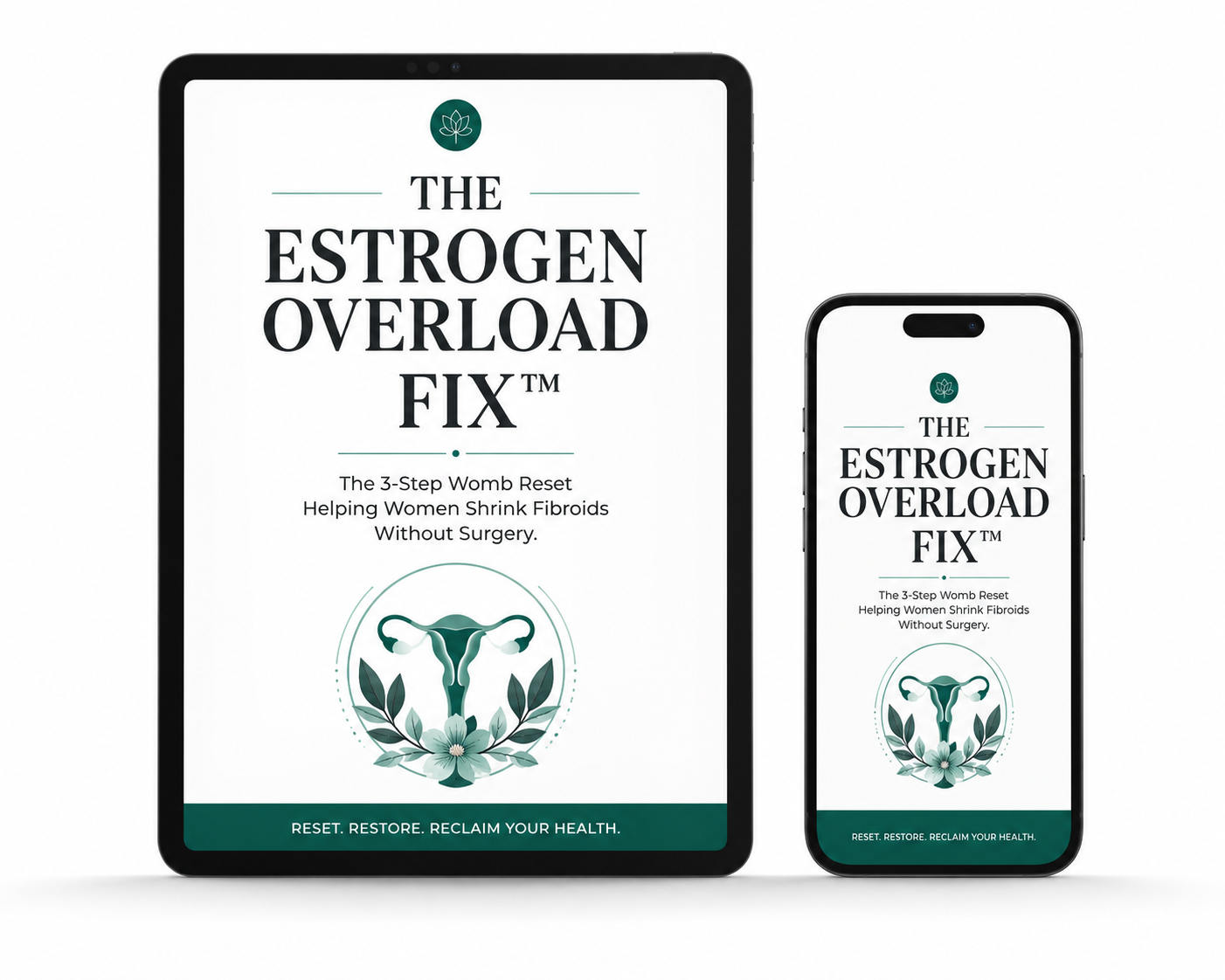
Everything Mama Idowu taught me — and everything I learned the hard way — written in plain language, so you can start this week with food from your local market.
Here is what is inside:
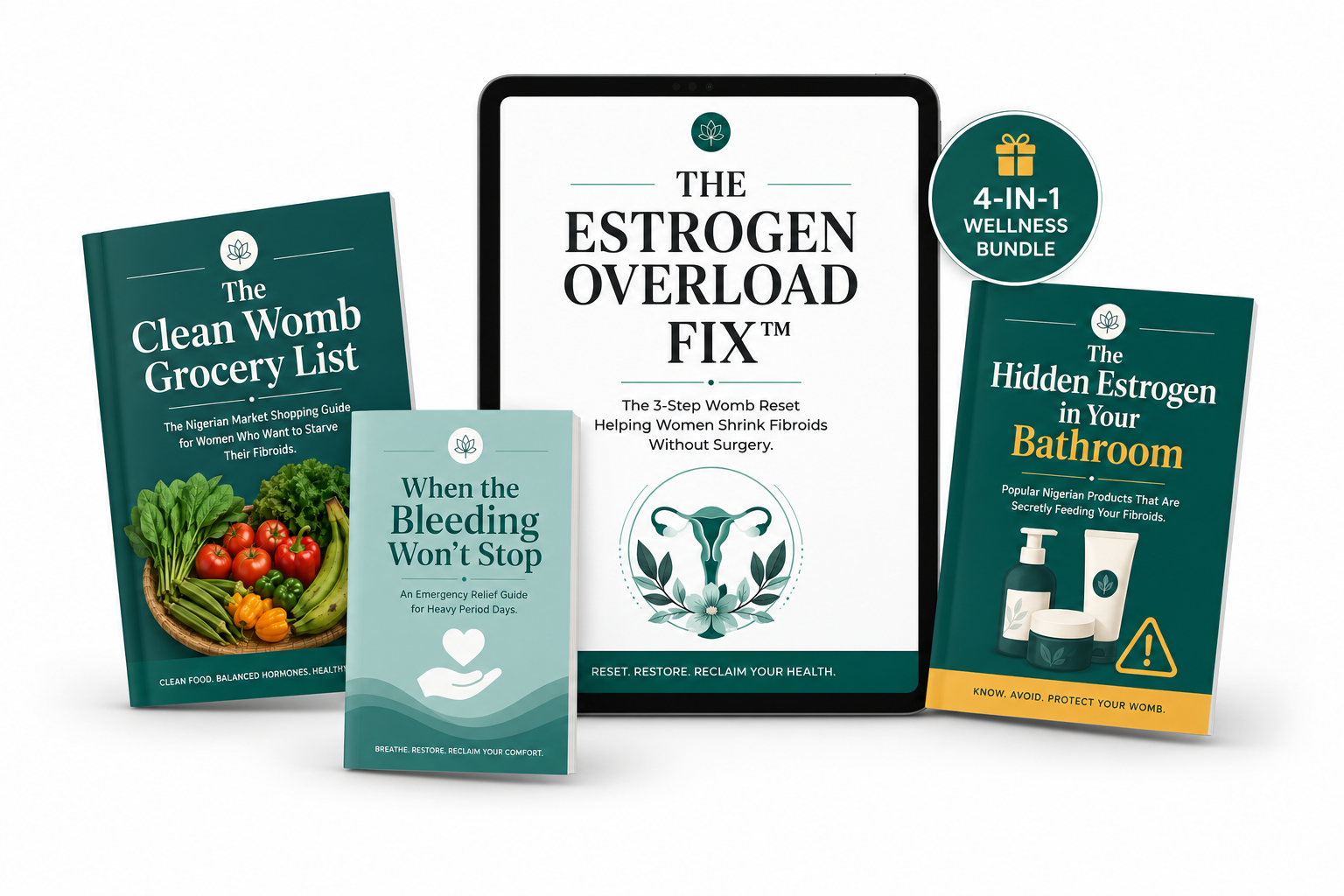
You do not need to travel anywhere. You do not need special ingredients. Everything is available in your local market. In total you get four guides — 62 pages — in one download.
Compare That To What You Have Already Been Spending
How Much Is It?
That "womb detox" tea I bought cost me ₦12,000. It tasted like boiled firewood and explained nothing.
This guide is four guides in one download: the main guide plus three bonus guides, 62 pages in total.
I want it to be something any woman can afford. So the price is:
Once You Click That Button, Here Is What Happens
Step 1: You will be taken to a secure payment page. One-time payment. No subscription.
Step 2: Pay with whichever option is easiest for you.
Step 3: Download your guide and all three bonuses straight away. Read it on your phone, tablet or computer.
It is me, Oyeteju. If you have any problem with your download, message me and I will make sure you get your files.
What Your First 4 Weeks Look Like
A simple roadmap. One small step at a time.
WAIT — I Have Something Special For You…
When you get the guide today, you also receive these three bonus guides completely free:
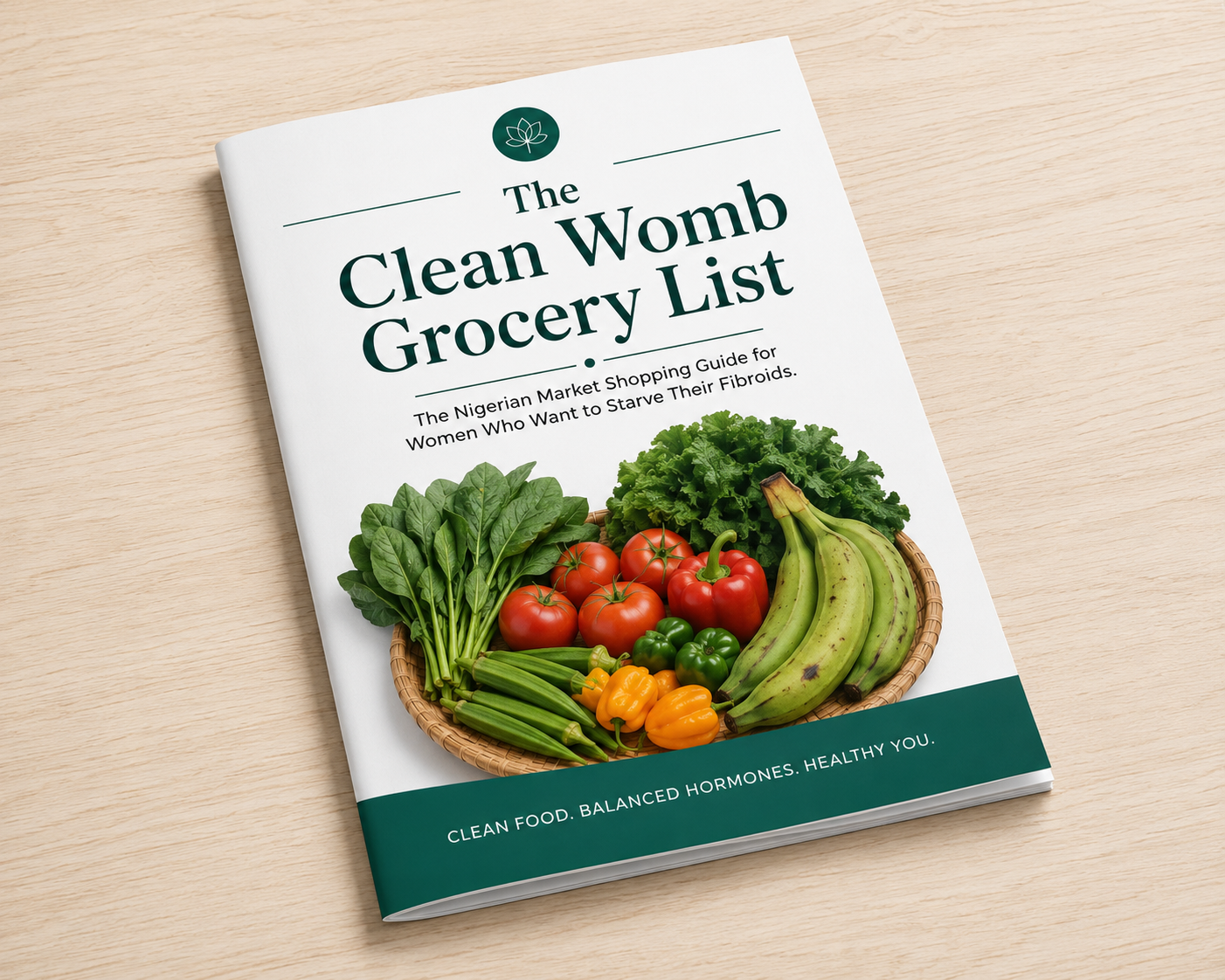
The Nigerian Market Shopping Guide for Foods That Support Hormone Balance
A ready-to-use shopping list from your everyday market, sorted Eat / Limit / Drop. Includes simple meals, the Balanced Plate method, cheaper local swaps for expensive "health foods," and a tight-budget shopping guide.
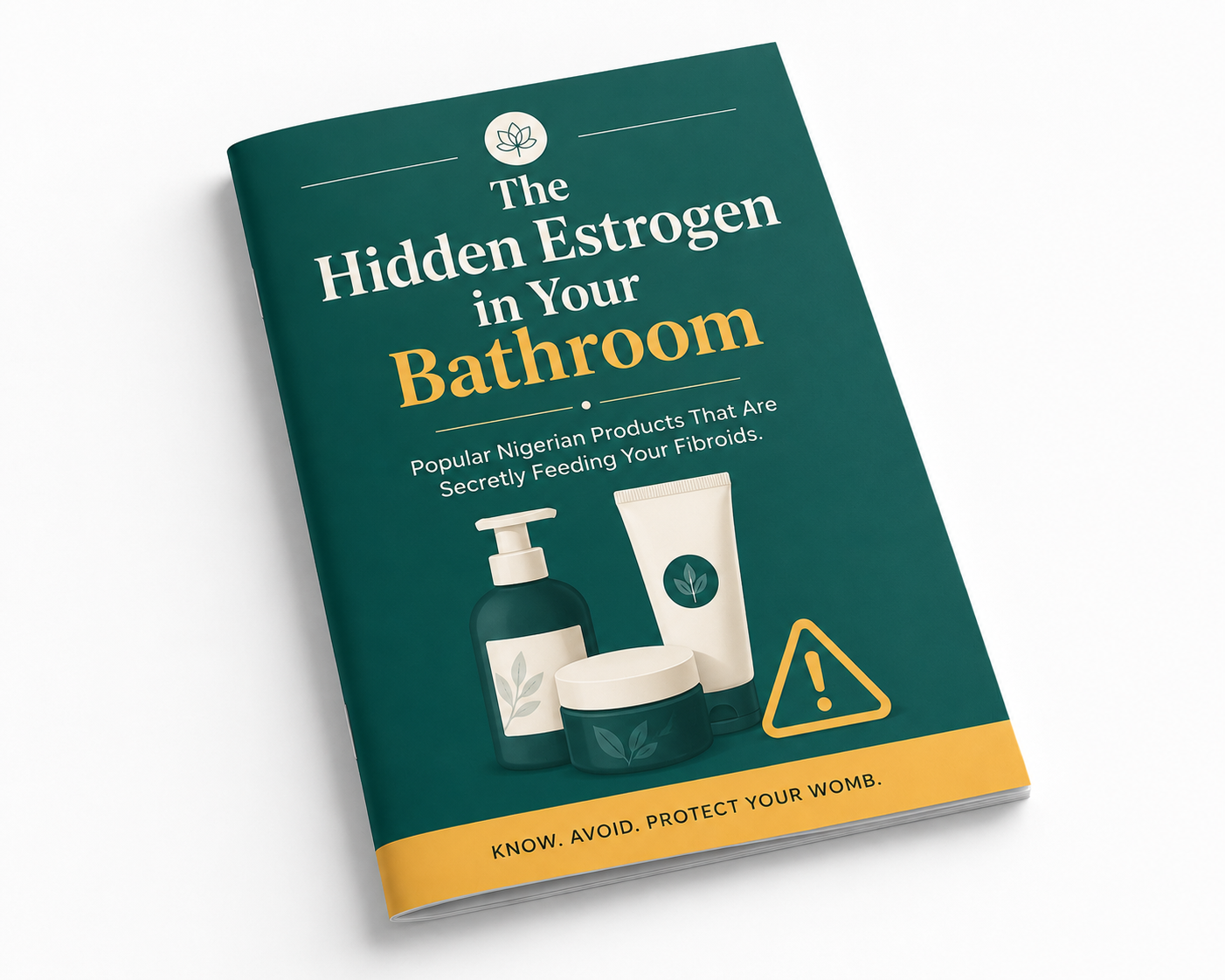
The Everyday Products That May Be Quietly Adding to Your Estrogen Load
The ingredient names to watch for on your creams and lotions, an honest look at bleaching creams, the plastic-and-heat problem, safer swaps you can find in Nigeria, a 10-minute bathroom audit and a gentle 30-day swap plan.
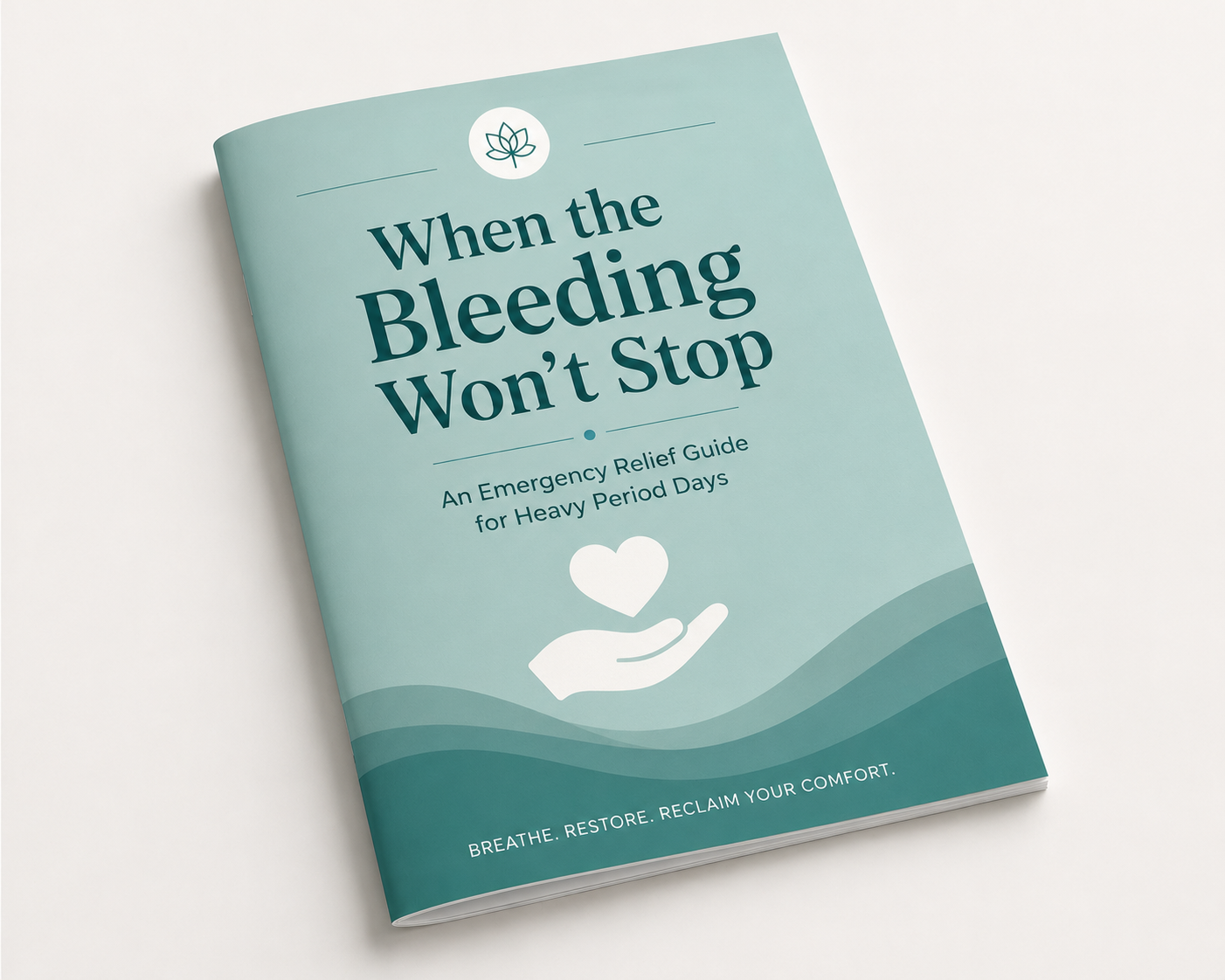
A Calm, Practical Guide for Heavy Period Days — and Knowing When to Get Help
How to get through heavy days, ease cramps, replace the iron you lose, and manage tiredness. Includes the warning signs that mean "go to the hospital now," questions to ask your doctor and a quick-reference card.
Everything You Are Getting Today
Right Now, You Have Two Choices
Choice 1: Keep Guessing
- You keep trying one thing after another and still do not know why.
- You keep arranging your life around your period.
- You keep walking into your doctor's office without knowing what to ask.
- The distance in your marriage stays where it is.
- You stay confused about your own body.
Choice 2: Start Understanding
- You learn what fibroids are and how estrogen fits in.
- You start the 3 Roots this week, with food from your market.
- You keep a simple tracker and take it to your doctor.
- You know the warning signs that mean "go to the hospital now."
- You stop feeling like a stranger in your own body.
My Honest Promise
I cannot promise that your fibroids will shrink. Nobody honest can. This is a guide for understanding and supporting your body, and it works alongside your doctor, not instead of her.
What I can promise is this: plain language, practical steps from your own market, the warning signs every woman should know, and a clear start-here plan so you stop guessing.
One Last Thing…
Picture yourself one month from today.
Will you finally understand what is happening inside your own body?
Will you walk into the market knowing exactly what to buy?
Will you walk into your doctor's office with a notebook and the right questions?
Will you stop reading labels with fear and start reading them with confidence?
Will you feel like you are finally helping your body instead of fighting it?
Now picture yourself one month from today if you close this page.
The same guessing. The same confusion. The same quiet dread when your period approaches.
The difference between those two versions of you is a decision you make in the next sixty seconds.
YES — I WANT THE GUIDEIf you have read this far and you are still hesitating —
I understand. You have been burned before. The detox teas. The big promises. The expensive bottles that explained nothing.
That is exactly why I am not promising magic. I am offering an explanation, in plain language, from a woman who has sat where you are sitting.
You have spent money on everything else for your womb. Spend a small amount on understanding it.
₦5,500 is less than the "womb detox" tea I bought. And this time, you will know why.
Stop guessing. Start understanding.
YES — I WANT THE GUIDEP.S. — This guide works alongside your doctor, never instead of her. Keep your scans. Keep your check-ups. And if you ever have very heavy bleeding, dizziness or severe pain, go to the hospital straight away.
P.P.S. — ₦5,500 is the launch price. It holds until 30 November, then it goes up to ₦7,500. The price includes all three bonus guides: the grocery list, the bathroom guide and the heavy-days guide. Four guides, one download, ₦5,500.
P.P.P.S. — Every month you spend guessing is another month of arranging your life around your period. You do not have to keep doing that.
With love for your healing,
Oyeteju
Frequently Asked Questions
How is the guide delivered?
Straight after your payment is confirmed, you can download the guide and all three bonuses. It is a PDF, so you can read it on your phone, tablet or computer. No app needed.
Are the foods and ingredients easy to find?
Yes. Everything is from your local market, supermarket or pharmacy. Bitter leaf, ugu, cabbage, beans, garlic, ginger, turmeric, oats, pawpaw. No imported powders or expensive supplements.
Will this shrink my fibroids?
I cannot promise that, and nobody honest can. There is no strong proof that food or home remedies can reliably shrink a fibroid. This guide helps you understand your body and support your hormone balance, alongside your doctor. Many women also feel better in themselves — less bloated, more energy — but only a scan can tell you what your fibroid is doing.
What if my bleeding is very heavy or my fibroids are large?
Then please see a doctor first. The guide lists the warning signs clearly — bleeding that soaks a pad every hour, dizziness, weakness, a racing heart, severe pain or a fast-growing belly. Those are hospital matters, not home matters.
What if my husband is sceptical?
He does not need to believe in it. The guide is something you read and do for yourself, in small daily habits. Many women find that when they feel better in themselves, the people around them notice too.
Why is this different from everything else I have tried?
Because most things you have tried were aimed at the fibroid itself. This guide looks at the ground it grows in — how estrogen builds up, how your liver and gut clear it out, and what in your everyday life you can change. It does not replace treatment. It explains the part that nobody had time to explain.